2008 Grantees
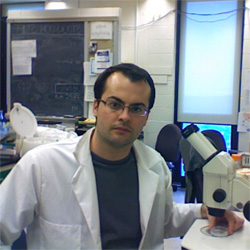 Pedro Medina, PhD, Yale University in the laboratory of Frank Slack, PhD. MicroRNAs are small molecules that regulate the expression of genes, i.e., when or where our genes should be read and translated into proteins. As their name indicates, they are very small, made from RNA and not from protein, in contrast to previously discovered expression regulators. Due to their small size and unusual nature, microRNA had not been discovered until only a few years ago. “Recently, these regulators have been seen to play an important role in cancer development, and they have opened a new field to help us to understand cancer biology and improve cancer diagnosis, prognosis and therapy. However many questions about the microRNAs remain to be unveiled. In our project we will try to shed light on the involvement of microRNAs in cancer,” said Dr. Medina.
Dr. Medina has been a Postdoctoral Fellow in the laboratory of Dr. Frank Slack, in the department of Molecular, Cellular & Development Biology at Yale University since May 2007. Prior to joining Dr. Slack’s lab, he was a Postdoctoral Fellow in the laboratory of Dr. Montserrat Sanchez-Cespedes, in the Lung Cancer Group at Spanish National Cancer Centre (CNIO), Madrid. During 2004, Dr. Medina was a Visiting Researcher in the laboratory of Dr. Hans Clevers at the Netherlands Institute for Development Biology. Dr. Medina received his doctorate and masters degrees from Spanish National Cancer Centre (CNIO) and his undergraduate degree in Microbiology from Universidad de Granada, Spain.
To view Dr. Medina’s research in the Journal Nature, click here
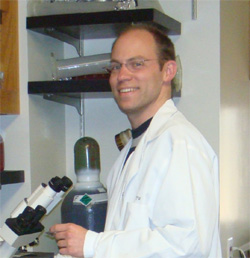 Nathan Robison, MD, Dana-Farber/Children’s Hospital, Boston. Dr. Robison, while a postdoctorial Fellow at USC, was one of the first recipients of the Hope Funds for Cancer Research Post Doctoral Fellowship. He received his bachelor’s degree from Williams College in Massachusetts, and his medical degree from the Keck School of Medicine at the University of Southern California. His pediatric training and his clinical Pediatric Hematology/Oncology fellowship were at Children’s Hospital Los Angeles. He then accepted a Pediatric Neuro-Oncology Fellowship at the Dana-Farber Cancer Institute. He his currently Clinical Instructor in Pediatrics at Harvard Medical School, and an attending pediatric neuro-oncologist at the Dana-Farber Children’s Hospital Cancer Center. His clinical research interests involve novel approaches to the treatment of poor-prognosis childhood brain tumors.
Dr. Robison is a member of the Alpha Omega Alpha honor society, Christian Medical Association, Society for Neuro-Oncology, and others. He has done two tours of medical service in rural Rwanda. Dr. Robison completed his Hope Funds research project in 2009 with positive finding. Nathan Robison’s webpage at Children’s Hospital Boston